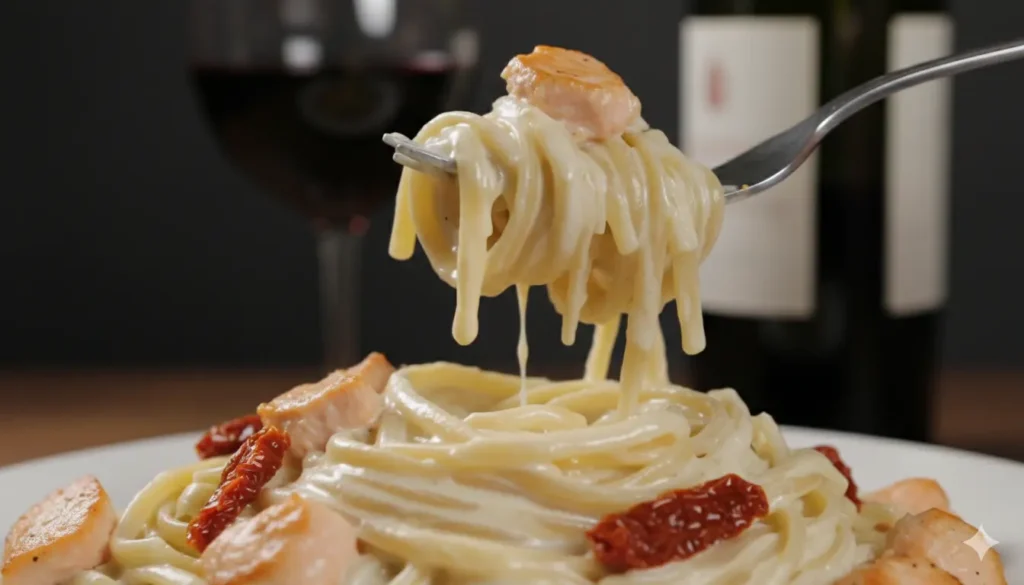
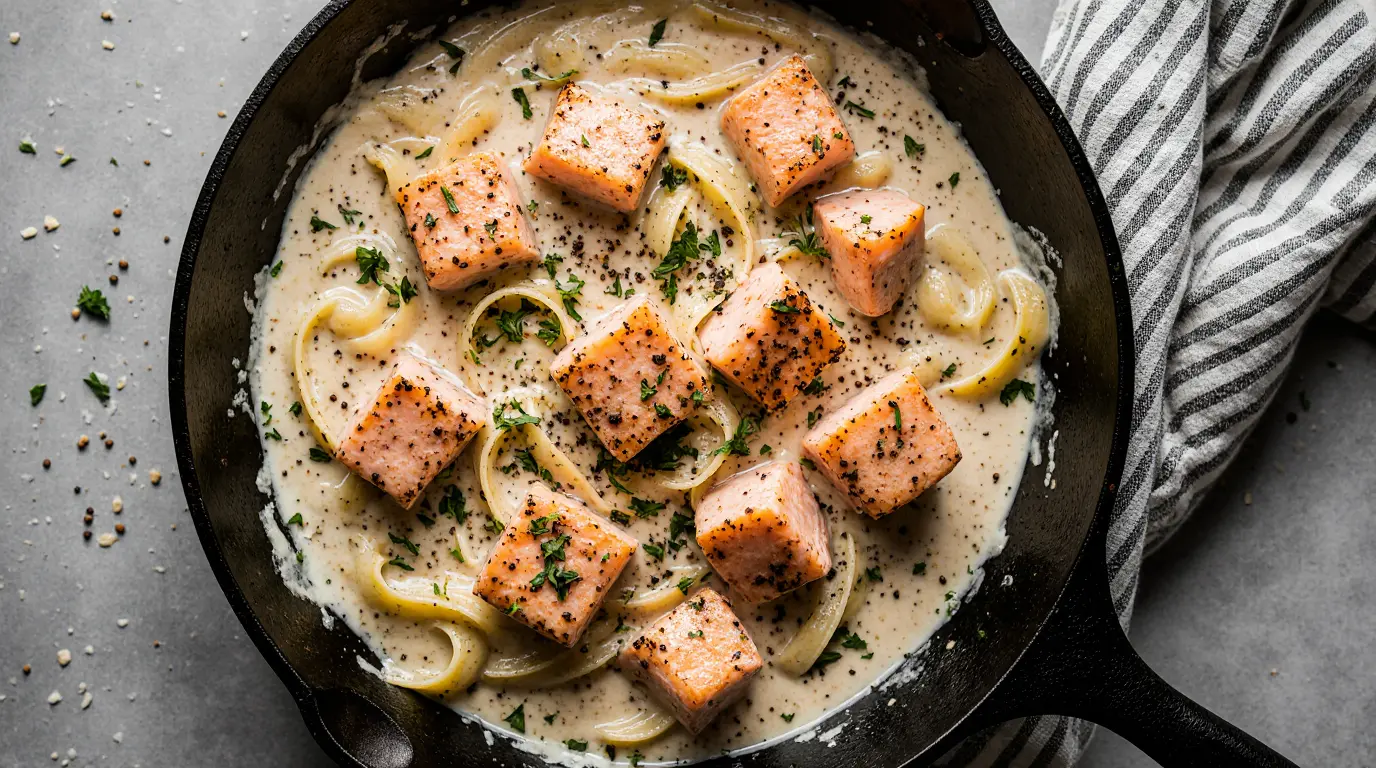
Restaurant-Quality Creamy Tuscan Salmon Pasta in 20 Minutes
Table of Contents
Picture this: It’s 6:00 PM on a Tuesday. The workday has drained your battery, your stomach is growling, and you are staring into the refrigerator with that familiar sense of dread. You want a meal that tastes like a $35 entrée from your favorite Italian bistro—something luxurious, comforting, and indulgent. But the reality is, you only have the energy for a 20-minute meal, and the thought of a sink full of dirty dishes makes you want to order takeout.
Stop right there. Put down the delivery menu.
You are about to discover the ultimate bridge between “fast food” and “fine dining.” This Creamy Tuscan Salmon Pasta is more than just a recipe; it’s your secret weapon for The magic comes from the perfect balance of flavors and textures.
Many home cooks are intimidated by seafood. There is a genuine fear of overcooking fish, turning a beautiful fillet into a dry, rubbery disappointment. If that sounds like you, take a deep breath. This recipe is virtually fail-proof. By combining the rich, heart-healthy fats of salmon with a velvety, garlic-infused Tuscan sauce, you create a forgiveness factor that ensures every bite is succulent and tender.
By the time you finish reading this guide, you won’t just have a recipe; you’ll have the confidence to sear salmon with crispy skin, master a one-pan cream sauce, and plate a dinner that looks like it belongs in a magazine—all in less time than it takes for the pizza delivery guy to arrive.
Why This Creamy Tuscan Salmon Pasta Recipe Works
You might be wondering, “What makes this specific combination so special?” The magic lies in the balance of flavors and textures. In the culinary world, balance is everything.
A standard cream sauce can sometimes feel one-note or overly heavy. However, this Tuscan sauce solves that problem by introducing sun-dried tomatoes and fresh spinach. The tomatoes provide a sweet-tart acidity (umami) that cuts right through the richness of the heavy cream and parmesan. The spinach adds an earthy freshness and a pop of color, while the garlic ties everything together with its aromatic punch.
But the real star here is the technique. Because you sear the salmon first and then build the sauce in the same skillet, you aren’t just saving on dish soap. You are utilizing the “fond”—those caramelized golden-brown bits left at the bottom of the pan after searing the fish. When you pour in your cream and aromatics, those bits dissolve into the sauce, infusing the entire dish with a depth of savory seafood flavor that you simply cannot get from using two separate pans.
Furthermore, from a nutritional standpoint, this dish is a powerhouse. You are pairing the high-protein, Omega-3 fatty acids of the salmon with the iron and vitamins found in spinach. It is a meal that feeds your soul without neglecting your body.
Ingredients You’ll Need
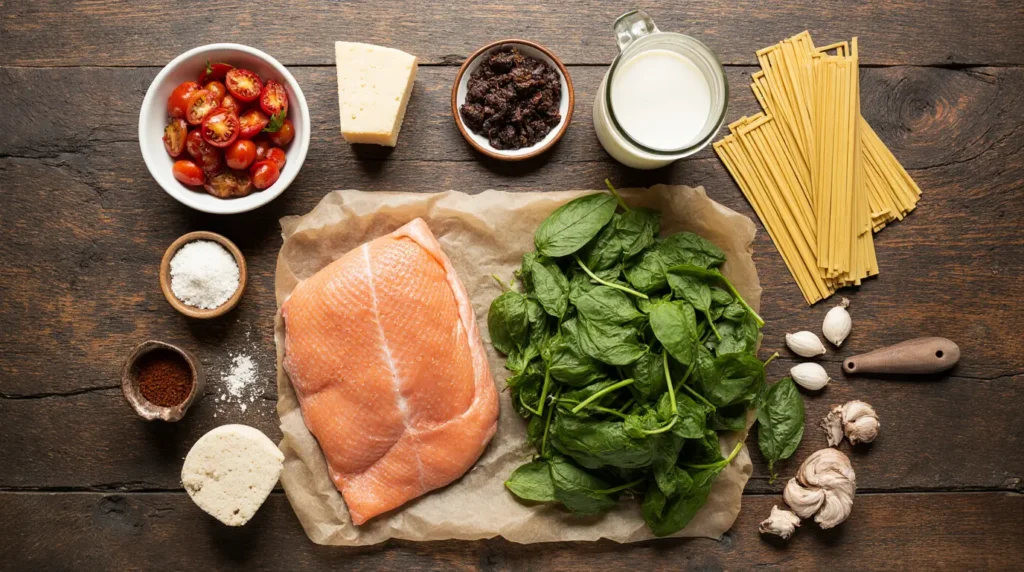
To create a restaurant-quality seafood pasta, the quality of your ingredients matters. You don’t need the most expensive items on the shelf, but you do need the right ones.
- Salmon: Fresh is best, but high-quality frozen fillets (thawed properly) work wonders. Look for fillets with the skin on. Even if you don’t love eating the skin, cooking with it keeps the flesh moist and adds flavor.
- Heavy Cream: This forms the backbone of the sauce. Avoid using milk or half-and-half if you want that thick, glossy, restaurant-style consistency. Lower fat dairy creates a thinner sauce that is prone to curdling when mixed with the acidity of the tomatoes.
- Sun-Dried Tomatoes: Buy the ones packed in oil, not the dry bagged ones. The oil in the jar is liquid gold—feel free to use a teaspoon of it when sautéing your garlic for an extra flavor boost.
- Parmesan: Skip the shaker can. Pre-grated cheese is coated in anti-caking agents (cellulose) that prevent it from melting smoothly. Buy a wedge and grate it yourself; it melts into the sauce like a dream.
Ingredient Checklist
Here is everything you need to grab from the store.
| Ingredient Category | Item | Quantity | Notes |
| Protein | Salmon Fillets | 2-3 (6oz each) | Skin-on preferred for searing |
| Pasta | Fettuccine, Penne, or Linguine | 8 oz | Pasta shapes with ridges hold sauce well |
| Produce | Baby Spinach | 3 cups | Fresh handles heat better than frozen |
| Produce | Garlic | 4 cloves | Freshly minced (don’t use jarred!) |
| Produce | Onion or Shallot | 1 small | Finely diced (optional, for sweetness) |
| Pantry | Sun-dried Tomatoes | 1/2 cup | Oil-packed, drained & chopped |
| Dairy | Heavy Whipping Cream | 1 cup | Essential for texture |
| Dairy | Parmesan Cheese | 1/2 cup | Freshly grated |
| Seasoning | Salt, Black Pepper, Paprika | To taste | Smoked paprika adds a nice touch |
| Fat | Olive Oil & Butter | 1 tbsp each | Oil for high heat, butter for flavor |
| Herb | Fresh Parsley or Basil | 2 tbsp | Chopped for garnish |
Step-by-Step Instructions for Perfect Creamy Tuscan Salmon Pasta
Ready to cook? The key to hitting the 20-minute mark is multitasking. Read through these steps once before you turn on the stove so you know exactly what comes next.
Step 1: The Setup and Pasta
First, fill a large pot with water and set it over high heat. Don’t be shy with the salt—your pasta water should taste like the ocean. This is your only opportunity to season the pasta itself.
While the water comes to a boil, prepare your ingredients. Chop your sun-dried tomatoes, mince the garlic, and grate the parmesan. Once the water is boiling, drop in your pasta.
Pro Tip: Cook the pasta to al dente (usually 1 minute less than the package instructions). The pasta will finish cooking when tossed in the hot sauce, soaking up all those delicious flavors. Before you drain the pasta, reserve ½ cup of the starchy pasta water. This is your “get out of jail free” card if your sauce becomes too thick.
Step 2: The Perfect Crispy Skin Sear
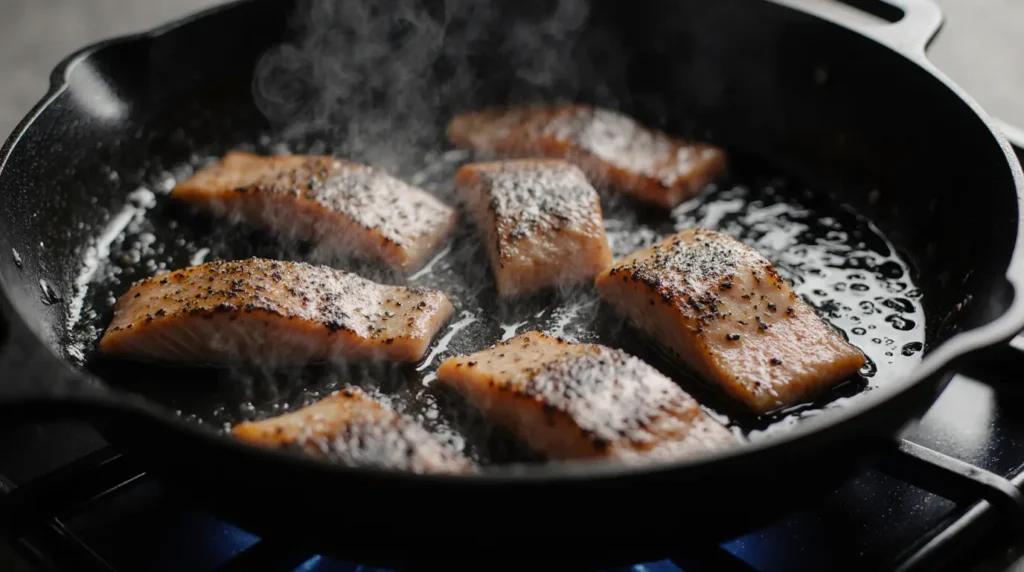
While the pasta boils, turn your attention to the salmon. This is the most critical step for texture.
- Dry it: Use paper towels to pat the salmon fillets completely dry. Moisture is the enemy of a good sear.
- Season: Rub the flesh side generously with salt, pepper, and paprika.
- Heat: Add the olive oil to a large skillet over medium-high heat. Wait until the oil is shimmering but not smoking.
- Sear: Place the salmon in the pan, skin-side down. Press down gently with a spatula for 10 seconds to ensure the skin makes full contact with the pan (it likes to curl up).
- Wait: Do not touch it! Let it cook for about 4-5 minutes. You will see the color of the fish change from translucent to opaque moving up the side of the fillet. You want the skin to be golden brown and impossibly crispy.
- Flip: Flip carefully and cook the flesh side for just 1-2 minutes.
- Remove: Transfer the salmon to a plate. It’s okay if it’s slightly underdone in the center; it will rest and finish cooking in the sauce later.
Step 3: Building the Tuscan Cream Sauce
Lower the heat to medium. Do not wipe out the pan! Add the butter to the skillet with the salmon juices.
- Aromatics: Toss in the garlic and sauté for about 1 minute until fragrant. Be careful not to let it burn—burnt garlic tastes bitter.
- Flavor Base: Add the chopped sun-dried tomatoes. Sautéing them for a minute helps “wake up” their flavor.
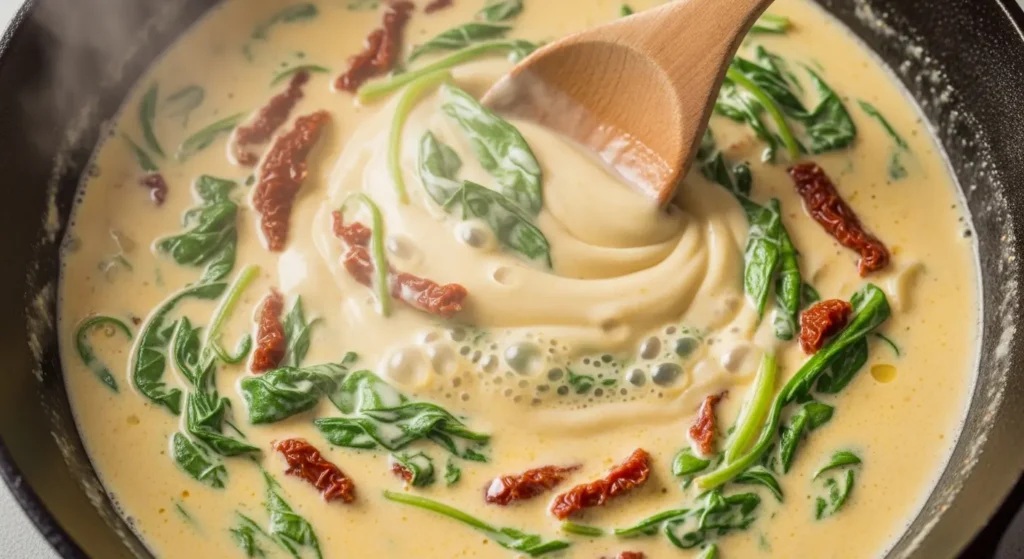
- Deglaze: Pour in the heavy cream. Use a wooden spoon to scrape the bottom of the pan, lifting up the flavor-packed browned bits left by the salmon. Bring this mixture to a gentle simmer.
- Cheesiness: Stir in the freshly grated parmesan cheese. Keep stirring until it melts and the sauce thickens slightly.
- Greens: Add the baby spinach. It will look like a mountain of greens, but it will wilt down into the sauce in about 2 minutes.
Step 4: Bringing It All Together
Now for the grand finale.
- Add the drained pasta directly to the skillet with the sauce. Toss it with tongs so every noodle is coated in the creamy, garlic-infused goodness.
- Texture Check: Is the sauce too thick? Splash in a little of that reserved pasta water until it reaches your desired consistency.
- The Reunion: Nestle the salmon fillets back into the pan. Crucial: Place them skin-side up on top of the pasta. This keeps that hard-earned crispy skin from getting soggy in the sauce. Alternatively, you can flake the salmon into chunks and stir it through if you prefer a more integrated seafood pasta.
- Let everything simmer together for 1 minute to ensure the salmon is warmed through.
- Garnish with fresh parsley or basil and serve immediately.
Expert Tips to Avoid Overcooking Salmon
The difference between a luxury meal and a sad dinner is often the internal temperature of the fish. Here is how to ensure your salmon remains buttery and soft.
- The Room Temp Rule: Take your salmon out of the fridge 15 to 20 minutes before you start cooking. If you throw ice-cold fish into a hot pan, the outside will burn before the inside is cooked, and the muscle fibers will seize up, squeezing out moisture.
- Watch for the White Stuff: If you see a lot of white substance (albumin) oozing out of the salmon, it means it is being cooked too fast or too long. A little is normal, but a lot means the fish is drying out.
- Carryover Cooking: Remember that heat remains in the fish even after you take it off the stove. If you cook the salmon to 100% doneness in the pan, it will be 110% done by the time you eat it. Pull it off the heat when it looks almost done.
Variations and Dietary Swaps
This recipe is incredibly versatile. Once you master the base Tuscan sauce, you can adapt it to whatever is in your fridge.
- The “Marry Me Chicken” Twist: If you aren’t a fan of fish, or you want to switch things up next week, this exact sauce is famous for being the base of the viral “Marry Me Chicken.” Simply swap the salmon for chicken breasts, sear them until golden, and simmer them in the sauce. It’s equally delicious.
- Gluten-Free: This recipe is naturally gluten-friendly if you swap the pasta. It works beautifully with gluten-free brown rice pasta or even zucchini noodles (zoodles) for a low-carb option.
- Dairy-Free: You can substitute the heavy cream for full-fat coconut milk or a high-quality cashew cream. While the flavor profile will shift slightly, the texture will remain creamy and satisfying.
Storage and Reheating Tips
While Creamy Tuscan Salmon Pasta is undoubtedly best served fresh off the stove, you can store leftovers if you have them.
How to Store Leftovers
Place any leftovers in an airtight container in the refrigerator. They will stay good for up to 3 days. However, be aware that the pasta will continue to absorb the sauce as it sits, so it may look a bit drier the next day.
How to Reheat Creamy Pasta
Avoid the microwave if you can! Microwaving cream-based sauces often causes the oil to separate, resulting in a greasy mess, and it will rubberize your salmon.
The Stovetop Method:
- Place the pasta and salmon in a skillet over low heat.
- Add a splash of water, milk, or broth to the pan. This is vital to “loosen” the sauce back up to its creamy glory.
- Cover with a lid and let it steam gently until warm, stirring occasionally.
FAQ: Common Questions About Creamy Tuscan Salmon Pasta
Q: Can I use half-and-half instead of heavy cream for this Creamy Tuscan Salmon Pasta?
A: You can, but the sauce will be thinner and less rich. Because half-and-half has less fat, it is more likely to curdle when you add the acidic tomatoes. If you use it, be sure to simmer it gently and perhaps mix in a teaspoon of cornstarch to help it thicken.
Q: Should I leave the skin on the salmon?
A: We highly recommend leaving the skin on during the cooking process. It acts as a barrier between the delicate flesh and the hot pan, preventing the fish from drying out. Plus, when seared correctly, the crispy skin adds a wonderful texture contrast to the soft pasta. If you hate skin, you can easily peel it off after cooking.
Q: What wine pairs best with Creamy Tuscan Salmon Pasta?
A: You want a wine that can stand up to the rich cream but also compliment the seafood. A full-bodied white wine, like an oaked Chardonnay, mirrors the creaminess of the dish. Alternatively, a crisp Pinot Grigio or Sauvignon Blanc offers a nice acidity to cleanse the palate between bites.
Q: Can I add other vegetables?
A: Absolutely. Mushrooms, asparagus, or roasted red peppers make excellent additions to this easy weeknight dinner. Sauté them alongside the garlic before adding the cream.
Conclusion
Cooking a luxury meal doesn’t have to mean spending hours in the kitchen or destroying your kitchen with a pile of dirty pots and pans. This Creamy Tuscan Salmon Pasta proves that with a few quality ingredients and twenty minutes of your time, you can create a dinner that rivals any high-end restaurant.
It’s the perfect blend of comfort and sophistication, making it ideal for a frantic Tuesday night or a romantic Saturday evening in. The crispy skin, the savory garlic-cream sauce, and the tender pasta come together to create a bite that is truly unforgettable.
So, tonight, skip the takeout. Grab that skillet, pour yourself a glass of wine, and treat yourself to the meal you deserve.
Did you try this recipe? We want to see your crispy salmon skin and creamy sauce creations! Snap a photo of your dinner and tag us on Instagram so we can share your masterpiece with our community. Happy cooking!